By Farvenzo Times editorial team · Published 25 October 2026 · Sources checked 25 October 2026 · 2 min read
Creator Economy / Explainer
Why Two Creator Brand Deals With the Same Views Can Have Different Value
Compare creator campaigns by the measurement definition, business objective and permitted use of the content—not the view count alone.
The number is only useful after its definition
Two proposals can promise the same number of views while offering different things. Before comparing their prices, establish what is counted, which platform supplies the count and the reporting period. A view total alone does not identify the audience reached, the action taken or the rights included in the fee.
The IAB's September 25, 2026 CreatorFronts recap identifies inconsistent view definitions, uneven reporting and differences in usage-rights arrangements as barriers in creator advertising. This is the trade body's account of an industry event and preliminary initiative, rather than evidence that every creator deal has those problems.
A hypothetical comparison makes the hidden differences visible
Imagine two campaigns priced at $2,000 each, both reporting 100,000 views. Dividing price by views and multiplying by 1,000 gives $20 per thousand reported views for each. That arithmetic is correct for the example, but it does not make the campaigns equivalent. One may include only an organic post; the other may include permission to reuse the asset in paid advertising for a defined period.
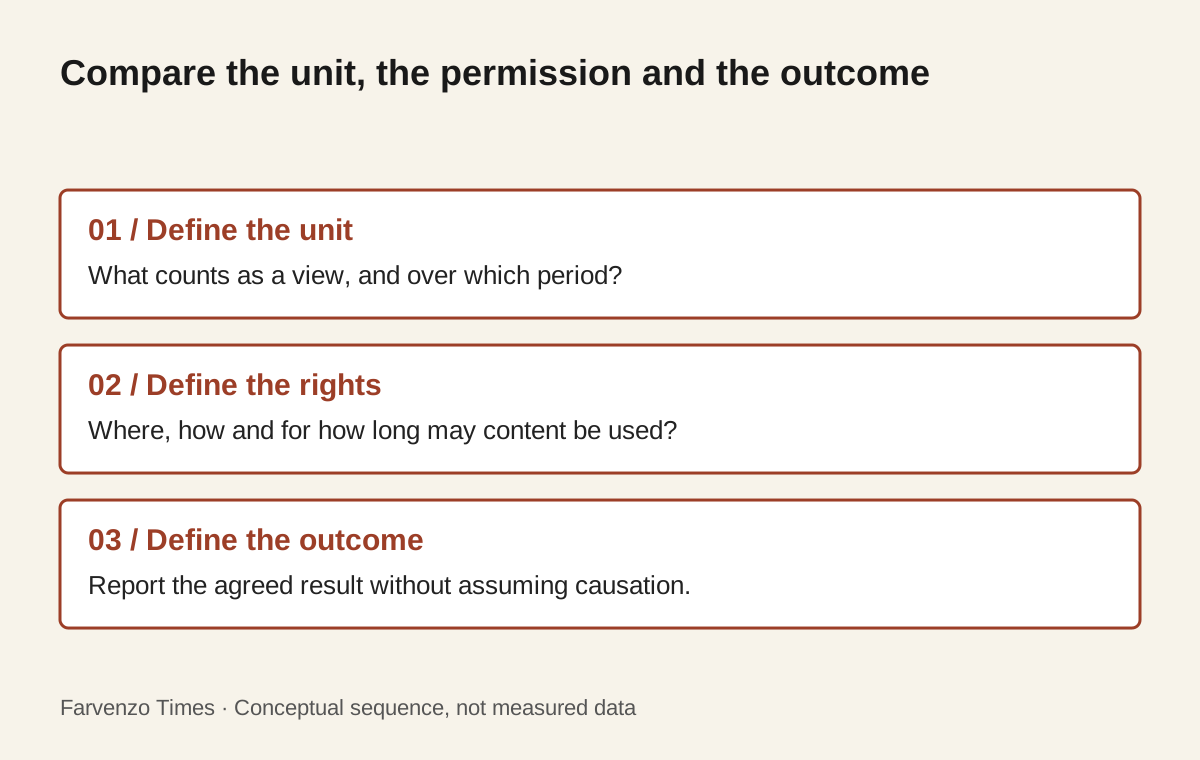
- 01 / Define the unitWhat counts as a view, and over which period?
- 02 / Define the rightsWhere, how and for how long may content be used?
- 03 / Define the outcomeReport the agreed result without assuming causation.
Conceptual sequence, not measured data. View the static graphic.
Write those terms beside the price instead of compressing them into one ranking. Useful comparison fields include the deliverable, reporting window, audience information, permitted placements, duration of use and any exclusivity. This is a planning checklist, not a template for interpreting a particular contract; unclear terms deserve qualified advice.
Define success before the content is made
The same IAB recap discusses setting business objectives, usage rights and disclosure requirements early while allowing creative flexibility. Its upcoming November 12 webinar also identifies inconsistent definitions and measurement as problems the industry wants to address. An announced discussion is not a completed standard, and a growth ambition is not a guaranteed market outcome.
For an invented campaign aimed at newsletter sign-ups, ask what counts as a completed sign-up, how duplicate entries will be treated and which dates the report covers. For an awareness campaign, agree the relevant reach or viewing measure instead. These are different objectives, so the same dashboard should not silently change the definition of success after results arrive.
Keep engagement, clicks and sales separate
A practical report labels each measured action and its denominator. Public likes or views cannot supply an impression-to-click rate when matching impressions and clicks are unavailable. A sale occurring during a campaign also does not, by timing alone, prove that the campaign caused it. Record what the available evidence can support and leave the rest uncertain.
A better deal comparison preserves the creative work while making the commercial terms legible. Start with the measurement unit, the permissions and the intended result. Then compare price. For the separate question of platform ad revenue, read RPM versus CPM.
Sources
Keep exploring
- YouTube RPM vs CPM: Why the Bigger Number Is Not Your Pay →
CPM describes advertiser spending per thousand ad impressions. RPM describes creator revenue per thousand relevant views. Their different denominators make direct comparisons misleading.
- Why a Profitable Creator Can Still Run Short of Cash →
A sponsorship can look profitable before its payment arrives. Separating work completed, invoices, payment dates and cash commitments exposes the gap.